





When the Platform Becomes the Ceiling
eCommerce replatforming is the process of moving your store to a new platform because the current one limits how you operate: extension debt that makes every change expensive, version support ending, hosting that buckles at peak, or licensing costs that no longer match the value. The decision deserves the same rigor as the build. We tell you honestly whether a replatform solves your problem or relocates it, and which platform fits how you actually operate.

Replatforming Without Losing SEO
Organic visibility is usually the largest asset a migration puts at risk, and the least visible until it is gone. SEO preservation is not a checklist item for us; search is one of our two core disciplines, and migrations are where the two meet.
- A full crawl and ranking inventory of the current site before anything moves
- One-to-one 301 redirect mapping for every indexed URL, prioritized by traffic and revenue
- Metadata, canonical, and structured-data parity on the new platform
- Internal linking and category structure carried over deliberately, not rebuilt from memory
- Search Console monitoring through and after cutover, with crawl-error triage until rankings stabilize
Rankings Don't Have to Reset
The pattern behind most post-migration traffic losses is boring: unmapped URLs, blanket redirects to the homepage, and metadata that never made the trip. All three are preventable with an inventory taken before the move. That inventory is the first deliverable of every engagement.
What we accomplished together was no small feat. Moving from physical to cloud infrastructure was a massive step for Designs by JuJu, and one we’ve been dreaming about for some time.
~ Julie Trieb, CEO of Designs by JuJu


What Moves, and How We Protect It
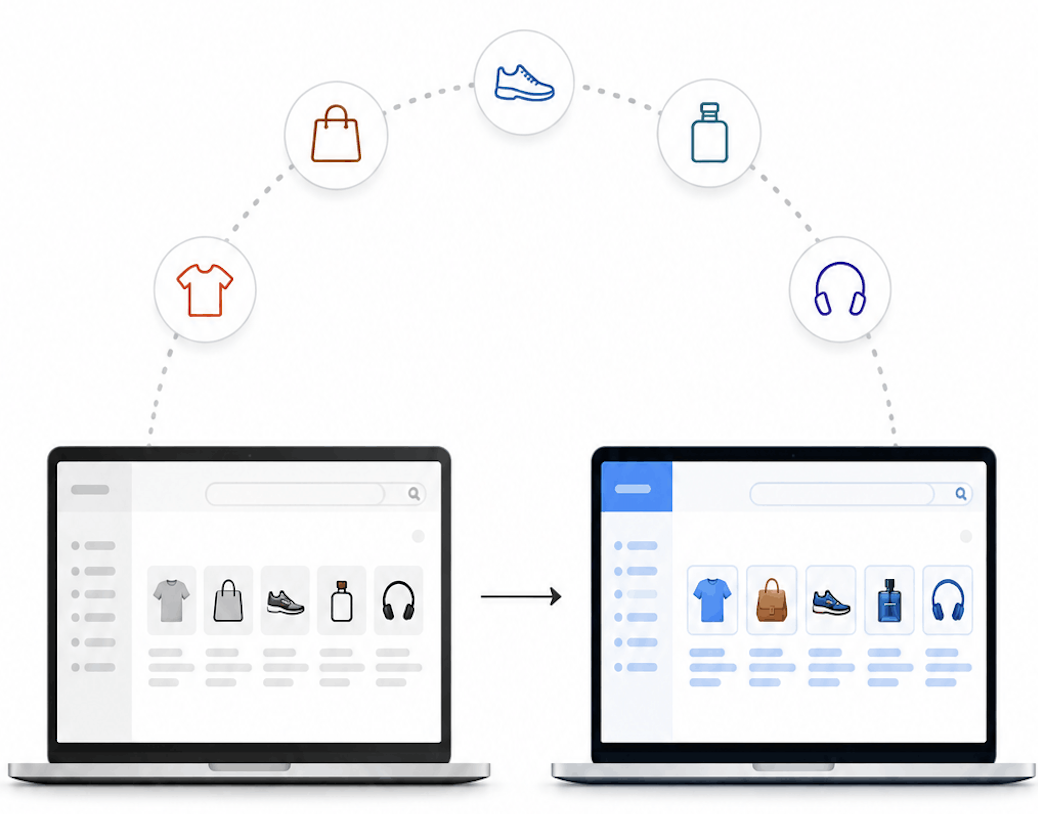
A migration is an exercise in accounting for everything. Products and their attributes, customers and their passwords, order history, content, promotions, reviews, and the redirect map itself all need a defined path to the new platform, and a verification step proving they arrived.
Integrations need the same treatment. ERP and inventory syncs, payment gateways, shipping and fulfillment automation, PIM and CRM connections, and vertical-specific systems such as FFL routing for regulated catalogs are mapped before development starts, so nothing critical is discovered missing after launch.
Audit First, Migrate Second
Every engagement starts with a replatforming audit: what exists, what moves, what gets rebuilt, and what should be left behind. Stale content and dead weight do not deserve a ticket on the moving truck.
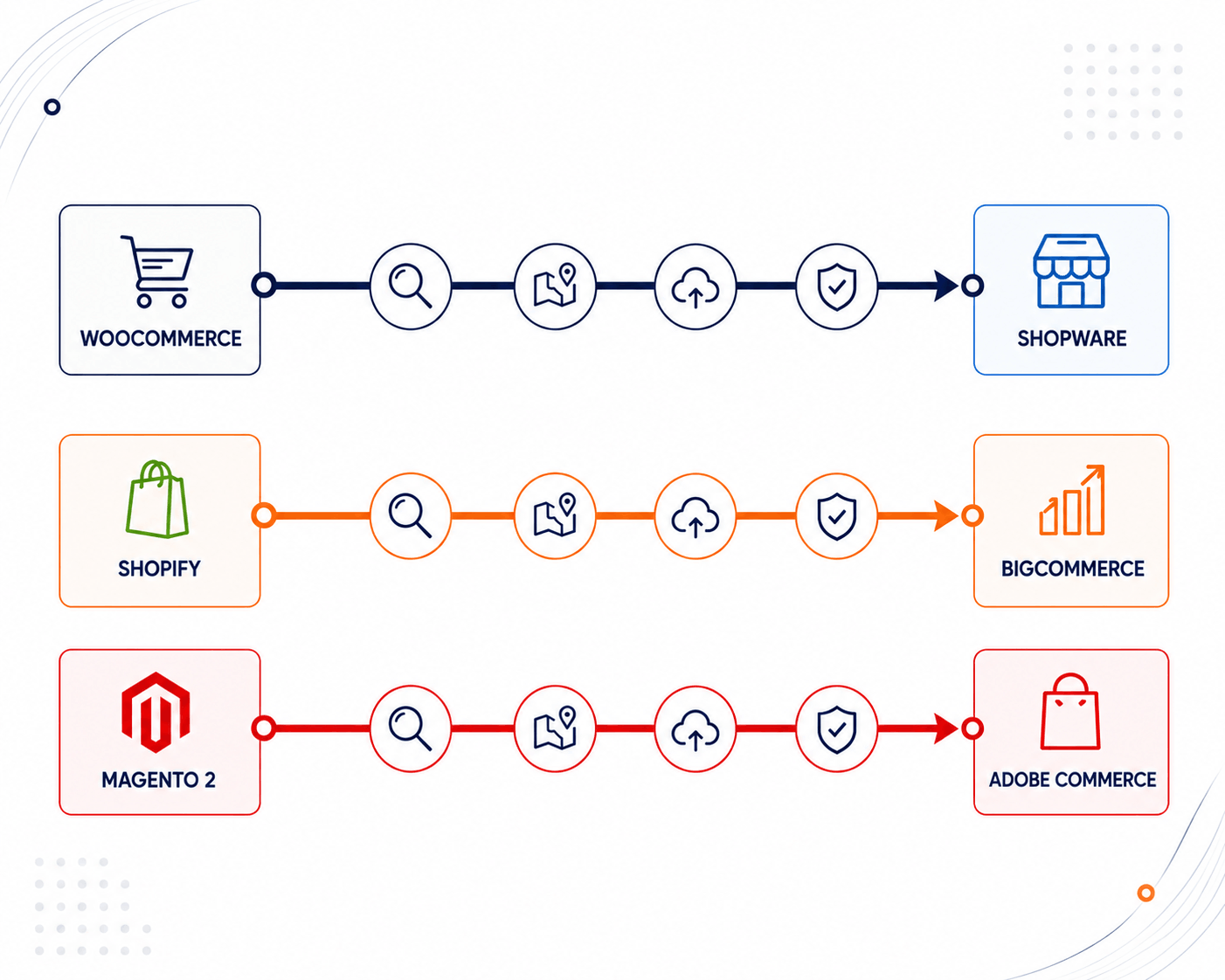
Migration Routes We Run
- Magento 1 and Magento 2 to Shopware, BigCommerce, or Adobe Commerce Cloud, when version support or extension debt forces the question
- WooCommerce to Shopware, when WordPress stops being the right foundation for the catalog
- Shopify to BigCommerce or Adobe Commerce, when platform policy, catalog complexity, or regulated products make Shopify untenable
We are a certified BigCommerce partner and a Certified Shopware Development Partner with Adobe Commerce heritage, and we will tell you plainly which destination fits and which does not. If you sell in a restricted category, platform policy is a first-order selection criterion, not a footnote.

B2B Replatforming Is Its Own Discipline
B2B stores carry logic most migrations never see: customer-specific pricing, contract catalogs, account hierarchies, approval workflows, and volume tiers. Recreating that logic faithfully is the difference between a replatform and a regression. We migrate B2B configurations as first-class requirements, tested against real accounts before cutover.
Our Migration Process
Moving platforms is where rankings and revenue are most at risk. We treat the migration itself as the deliverable, not a side effect of the new build, so nothing gets lost in the move.

Audit & Inventory
Crawl, ranking inventory, data census, integration map, and the honest go/no-go conversation. Outcome: a scoped migration plan with nothing discovered later.
Mapping & Architecture
URL redirect map, data field mapping, integration architecture on the destination platform, and the rebuild list for anything that cannot lift and shift.
Build, Stage, & Verify
The new store is built and populated in staging, integrations connected, data reconciled against source counts, and SEO parity checked page by page.

Cutover & Monitoring
A planned launch window, live redirect verification, Search Console resubmission, and monitoring until performance and rankings hold steady.
Explore Our Success Stories