




Skip to content

eCommerce ERP & System Integration

Smart Solutions engineers integrations between eCommerce platforms and the systems your operation depends on. Each integration is built to support your workflows and withstand version changes rather than break with them.

What ERP Integration Actually Means for a Storefront

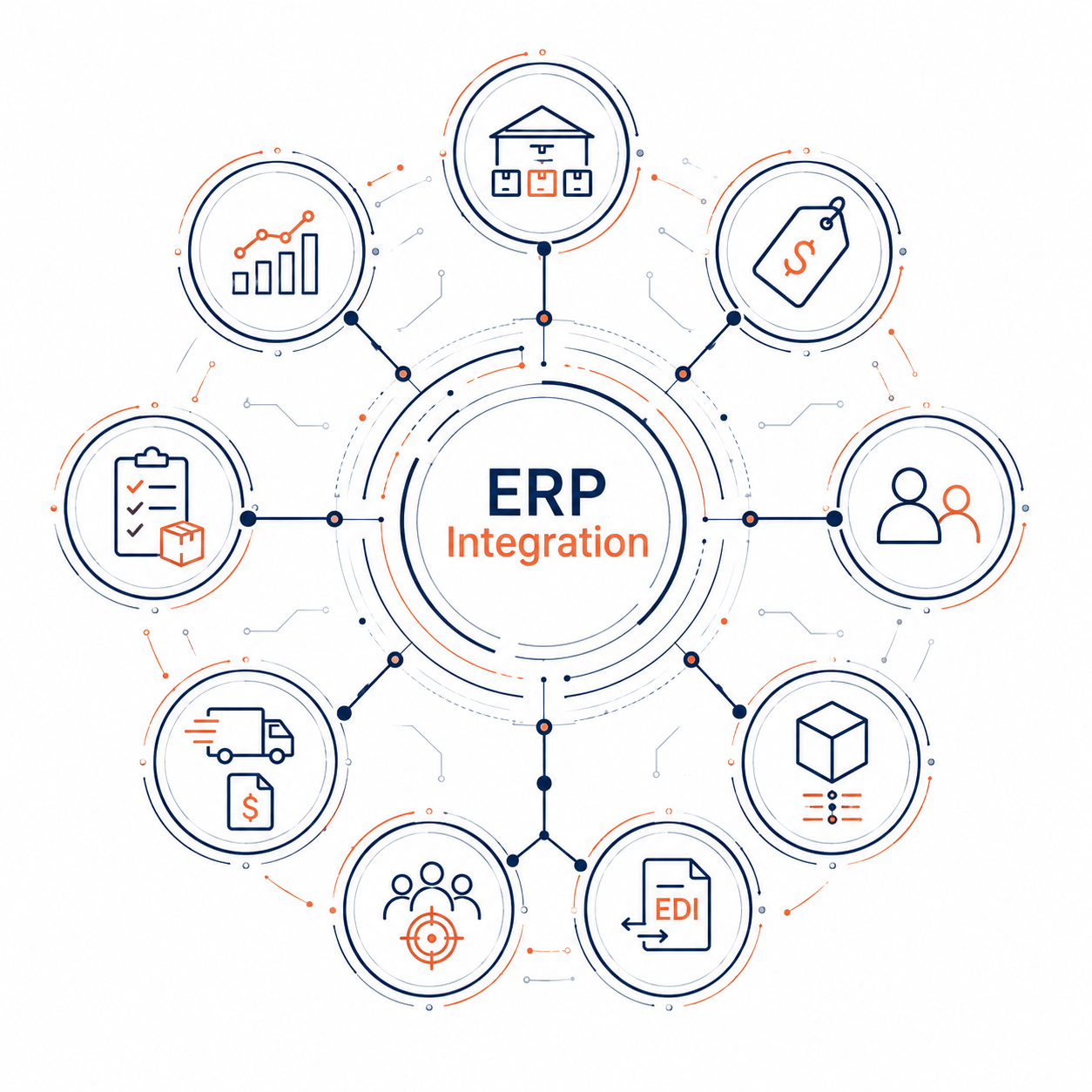
ERP system integration connects your commerce platform to your enterprise resource planning system so both operate from the same information. In practice, that means a two-way flow: the storefront sends orders and customer records down to the ERP; the ERP sends inventory, pricing, and fulfillment status back up to the storefront. Done well, nobody re-enters anything, stock levels are honest, and finance closes the month from one reliable system of record. Done poorly, the operation depends on a nightly CSV file and someone manually checking that it worked.

erp-integration
Scope

What We Keep in Sync

Every integration is scoped around the data your operation actually depends on:

  • Inventory synchronized across warehouses, storefronts, and channels, so availability is never a guess
  • Pricing flowing from the ERP as the source of truth, including customer-specific and contract pricing for B2B
  • Orders and order status, from placement through fulfillment, refund, and return
  • Customer accounts matched between systems without duplicates
  • Shipments and invoices, so operations and accounting see the same transaction
  • Product data synchronized from PIM systems, keeping complex catalogs consistent and maintainable
  • Marketing and CRM connections, so segmentation runs on real purchase data
  • EDI flows for B2B trading partners that require them

ecommerce-solutions-platforms
Systems

Systems and Platforms We Connect

We integrate BigCommerce, Adobe Commerce and Magento, Shopware, Shopify, and WooCommerce storefronts with the systems merchants actually run: ERP and inventory platforms including Sage and Erply, order management and fulfillment systems, PIM, CRM, and payment infrastructure. In healthcare commerce, we build against ERP, inventory, fulfillment, and clinical-system dependencies. In regulated retail, we have engineered verification and compliance systems most integrators never touch, including a custom ID.me verification framework for BigCommerce checkout and eCheckPoint compliance automation for restricted products.

The honest scoping rule: if a system exposes an API or a structured file exchange, it can be integrated. The real questions are data ownership, conflict resolution, and what happens when either side changes. Those are the questions we scope first.

When an Integration Keeps Breaking

Inherited a sync that fails silently, double-writes orders, or dies with every platform update? We diagnose and stabilize existing integrations and replace them only when repair is the more expensive path.
api-integration
Method

Connector, Middleware, or Custom API

There are three ways to connect an ERP to a storefront, and the right one depends on your systems, not on what an integrator prefers to sell:
  • Pre-built connectors work when both systems are standard and your workflows are too. They are the fastest path and the first to break when you customize.
  • Middleware platforms sit between systems, translating data and absorbing change. Right for multi-system architectures with real volume.
  • Custom API integration fits when workflows are specific to your operation, or when a connector covers 80 percent and the missing 20 percent is the part your business runs on.
The connector is rarely the project. Field mapping, edge cases, error handling, and reconciliation are the project. We say that up front because it is where integration budgets actually go.
regulated-ecommerce-storefront
Regulated & B2B

Integration in Regulated and B2B Commerce

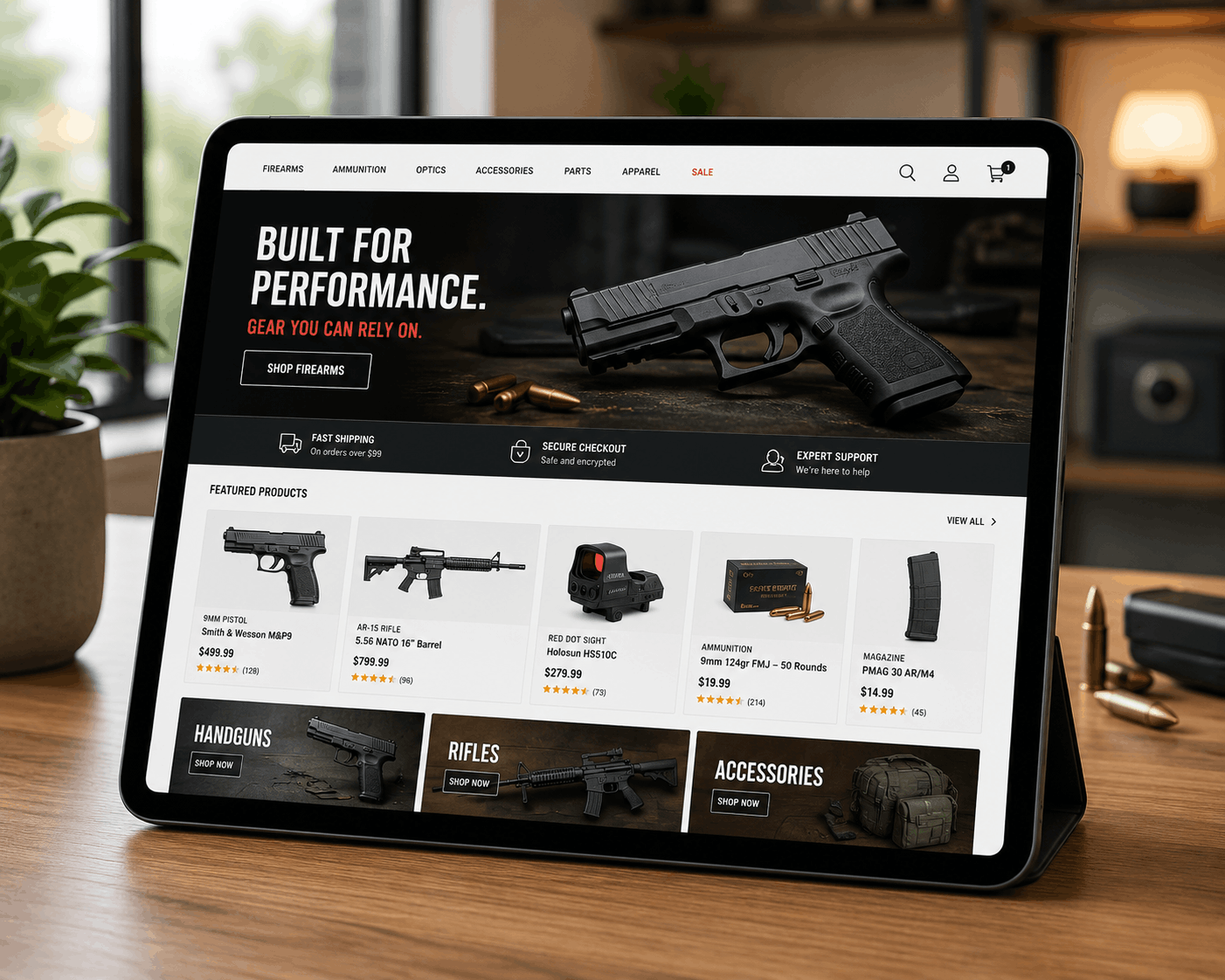
Regulated catalogs put requirements on integration that generic connectors do not anticipate: FFL dealer routing on qualifying products, age and identity verification in checkout, compliance checks before an order is released to fulfillment, and audit trails that prove all of it happened. We have built these flows in production for firearms and tactical retailers, and the same discipline carries to B2B: contract pricing sync, account entitlements, and approval workflows that must match the ERP exactly.

Our Integration Process

We build integrations for the systems you actually run, whatever the combination, and hold every one to the same bar: accurate data, clear ownership, and a sync that keeps working after launch.

Audit Outline Build Observe
eCommerce Discovery & Strategy

Assess

Inventory the systems, versions, data volumes, and workflows. Identify the system of record for every data type before anything syncs.

eCommerce Architecture & Design

Map

Field-level data mapping, ownership and conflict rules, and the integration architecture: connector, middleware, or custom API, chosen on evidence.

eCommerce Development & Quality Assurance

Build & Stage

The integration built and run against staging data, with error handling and alerting engineered in from the start, not added after the first silent failure.

eCommerce Growth Chart

Reconcile & Monitor

Source-to-destination counts verified, then monitored in production until the sync has earned trust. Post-launch, integrations are covered under our platform stability support.

Frequently Asked Questions

ERP integration connects your storefront to your enterprise resource planning system so both share the same data automatically. Orders and customers flow from the store to the ERP; inventory, pricing, and fulfillment status flow back. The result is one version of the truth across operations, no manual re-keying, and stock levels customers can trust. It is the difference between systems that cooperate and teams that reconcile spreadsheets.
We have implemented integrations with ERP and inventory systems including Sage and Erply, alongside order management, PIM, CRM, payment, and fulfillment platforms, plus verification systems such as ID.me and compliance automation through eCheckPoint. More broadly, any system with an API or structured file exchange can be integrated. The scoping questions that matter are data ownership, workflow fit, and how the integration survives change.

The standard scope covers inventory, pricing, orders and order status, customers, shipments, and invoices, with product data synchronized from a PIM where one exists. B2B adds contract pricing, account entitlements, and EDI flows. Each data type gets an explicit system of record and conflict rules, so the two systems never argue about which number is real.

A standard connector-based integration between common systems typically runs two to six weeks. Custom API work, complex field mapping, or multi-system architectures run eight to twelve weeks or more. The assessment stage produces a timeline from your systems' actual condition. Integrations fail on unscoped edge cases, so we spend the early weeks finding them rather than discovering them in production.
Connectors fit standard systems with standard workflows and are the fastest path. Middleware earns its cost in multi-system architectures with real volume. Custom API integration fits operations whose workflows are their competitive advantage. We recommend on evidence from your stack, and we tell you plainly when the cheap option is the right one. The connector choice is rarely what determines success; mapping and error handling are.
Yes, and repair is often faster than replacement. We diagnose failing syncs, add error handling and alerting when the original build is skipped, and stabilize the integration before recommending anything larger. When replacement is genuinely the better economics, we migrate the integration alongside your normal operations, with reconciliation counts proving nothing was lost on the way.

Unlock More eCommerce Growth

If your team reconciles systems by hand, or an integration fails often enough to have a nickname, the next step is an assessment of what you run and what it should cost to connect it properly.
logo-symbol