







AI search is reshaping eCommerce visibility. Learn how AI Overviews, zero-click search, and declining CTR impact your strategy, and what to do next.

AI Overviews, Zero-Click Search, and SEO Visibility for eCommerce in 2026
Search has changed quickly, and most teams haven’t adjusted yet. What used to work in SEO no longer guarantees results. Rankings still matter, but they no longer tell you whether your brand is visible where decisions actually happen. The shift comes down to one core change: users no longer need to click.
Why Traditional SEO Metrics Are Losing Meaning
Zero-click search now defines how users interact with Google. Instead of visiting multiple sites, users get answers directly on the results page. This started with Knowledge Panels and Featured Snippets, but AI Overviews accelerated the shift.
As these features expanded, click-through rates dropped from around 35% when results were mostly traditional rankings to about 8% with Featured Snippets, and often under 1% with AI Overviews. At the same time, the search results page is filled with competing elements, including AI Overviews, People Also Ask, Local Packs, and more.
Google now decides what matters most for each query, and users follow that path. This creates a gap many teams miss. Rankings may hold steady, but traffic declines anyway.
What AI Overviews Change
AI Overviews sit at the top of the page and answer the user’s question immediately. They also determine which sources get visibility.
When users click, they tend to click on cited sources within the AI summary rather than the traditional organic results below it. That pushes positions 1–3 further down the page, reducing their impact. In many cases, more than half of searches with an AI Overview result in no clicks.
This is where the shift becomes clear. Organic ranking and actual visibility are no longer the same thing.
What The Data Already Shows
The impact is already visible, especially for top-ranking results. Analyses show a decline in CTR for position-one results between late 2023 and 2025, with an average drop of around 6%.
In practice, the drop looks sharper. Desktop CTR has fallen from about 13% to below 5%, while mobile has dropped from about 20% to 7%. Mobile sees a greater impact because AI Overviews take up similar space across devices, but smaller screens require more scrolling to reach traditional results. The pattern is consistent. Rankings remain, but visibility declines.
 Where Visibility Loss Shows Up First
The earliest signals don’t appear everywhere at once. They show up in specific parts of the journey, starting at the top.
Informational Queries Are The First Warning Sign
Top-of-funnel searches are the most exposed. Queries like “how to” or “what is” now get answered directly in AI Overviews, removing the need for users to visit a site to proceed.
For some position-one keywords, CTR dropped from 0.076% to 0.039% as AI Overviews expanded. If your strategy relies on informational traffic, you will feel the pressure first.
Mid-Funnel Content Gets Summarized
The impact doesn’t stop at early-stage queries. AI Overviews now shape product comparisons and buying research. A query like “best pasta with no carbs” returns a curated list pulled from multiple sources, reducing the need for users to explore on their own.
This changes how influence works. If your content is not part of that summary, you don’t enter the decision.
Competitors Get Cited While You Don’t
One of the clearest signals of visibility loss is seeing competitors appear inside AI Overviews while your brand does not, even if you still rank highly.
The issue isn’t ranking position. It’s whether your content gets selected as a source. AI systems favor depth and coverage, so brands with broader, well-structured content across a topic get cited more often than those with limited coverage.
This shifts the goal. You’re no longer competing for position. You’re competing to be referenced.
What Reporting Reveals (And Hides)
Most teams don’t recognize the shift immediately because the data doesn’t look dramatic at first. Instead, you’ll see impressions increase or stay stable while clicks decline and CTR drops, even though rankings don’t change significantly.
This is often misread as seasonality or normal fluctuations. It isn’t. This is AI search decoupling clicks from queries. The search still happens, but the click gets absorbed into the AI experience.
These signals can appear months before revenue impact becomes obvious, which makes early diagnosis critical.
The Core Shift: From Ranking To Visibility
Ranking used to define success. Now visibility does. Visibility means your content can be understood, interpreted, and referenced by search systems. If your content doesn’t meet that standard, ranking alone won’t drive outcomes.
Clicks become less reliable as a primary metric. Presence inside AI summaries and citation areas becomes more important. For many users, the first interaction with your brand now happens inside an AI-generated answer, not on your site.
What This Means For eCommerce
AI Overviews compress the buying journey by reducing or removing parts of the research and comparison stages. Users move closer to a decision without having to visit multiple sites.
That increases the value of being cited, but it also increases the risk of being excluded. The focus shifts from driving traffic to influencing decisions earlier in the journey. The question becomes whether your brand shapes that decision or gets left out of it.
What Content And Sites Need In 2026
The requirements are not entirely new, but the standard is higher. Search systems rely heavily on structured data, so schema and machine-readable signals help them interpret your content quickly and accurately. Without this, your content becomes harder to use.
At the same time, clarity matters more than complexity. Pages need clear headings, well-organized content, and direct answers to specific questions. Content needs to work for both readers and systems.
Authority also comes from coverage, not volume. Content should align to defined topics, build depth across those areas, and connect into clear clusters. A small amount of content won’t establish authority, but consistent, focused coverage will.
Finally, visibility extends beyond your website. Search systems evaluate your presence across the web, including social platforms, distribution channels, and audience engagement. Relying on Google alone to drive traffic becomes increasingly difficult.
The Implication: Success Happens Before The Click
AI Overviews shift where decisions happen. Users no longer need to compare multiple sources or read multiple articles. The system does that work for them.
This makes inclusion in AI summaries more valuable and exclusion more costly. The outcome often gets shaped before a user ever reaches your site.
What To Watch Now
You don’t need new tools to see the shift. Look for declining CTR alongside stable impressions, traffic loss in informational content, competitors appearing in AI summaries, and reduced citation of your content. These are early indicators of visibility loss and often appear before larger performance issues surface.
The Decision In Front Of You
AI search is already reshaping how users discover and evaluate brands. The decision is not whether this change matters. It’s whether your content becomes a source the system uses or one it ignores. That decision compounds over time.
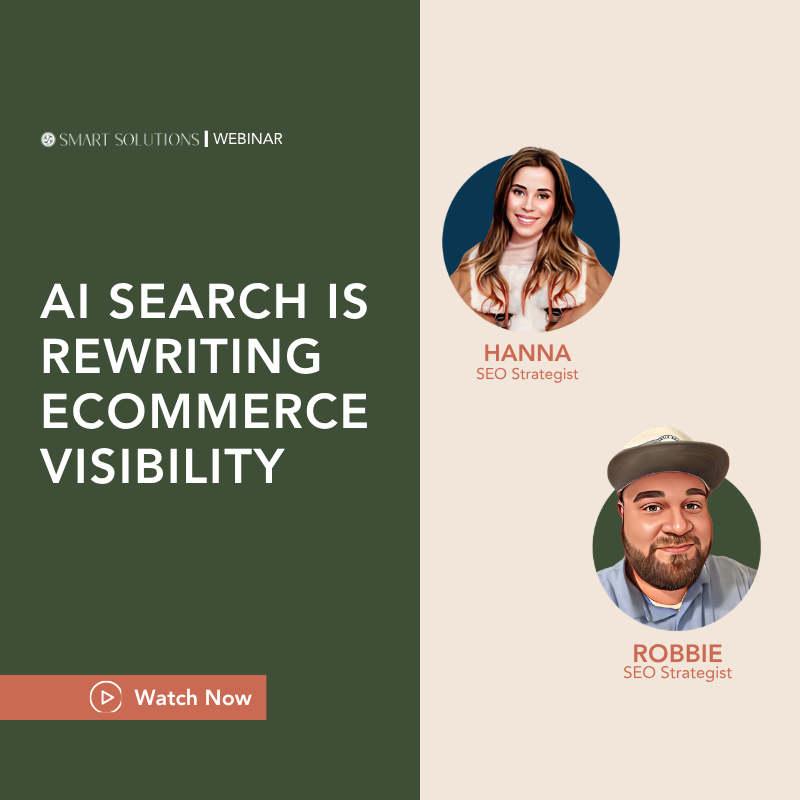
Watch The Webinar And Start Building Your Strategy
If you’re seeing traffic hold steady while clicks decline, or competitors show up in AI results where you don’t, this shift is already affecting your business.
Watch the full webinar to see how AI search is changing visibility and what that means for your growth strategy.
If you want to understand how this applies to your business specifically, we can walk through it with you. Book a call to evaluate where your visibility is at risk and where you can start building authority inside AI search.


Explore More Resources




.png?width=396&height=221&name=Adobe%20shift%20to%20SaaS%20(1).png)
