





AI search is changing how customers discover, compare, and buy. See how to adapt your marketing funnel for the AI shopping era.

Online shopping has changed, and the path to purchase is no longer driven by traditional search alone. Instead of clicking through blog posts and review sites, many shoppers now turn to AI-powered tools like ChatGPT, AI Mode, and Perplexity to get instant explanations, comparisons, and recommendations in one place.
This shift doesn’t make the marketing funnel obsolete, but it does change how brands earn visibility, trust, and influence at every stage. In this guide, we’ll break down the classic marketing funnel: awareness, interest, consideration, conversion, loyalty, and advocacy, and show how each stage maps to the way consumers use AI search when shopping online.
What is a Marketing Funnel?
A marketing funnel is a simple framework that describes how someone goes from discovering your brand to becoming a customer — and ideally, a loyal advocate who returns and recommends you to others.
At the top of the funnel, people realize they have a need and explore what solutions exist. As they move down, they research options, compare alternatives, and gain confidence in their decision. By the time they reach conversion, they’re ready to take action — whether that’s making a purchase, starting a trial, or booking a call.
Importantly, the funnel doesn’t end after conversion. Strong onboarding, helpful support, and thoughtful retention marketing turn one-time buyers into repeat customers and brand advocates.
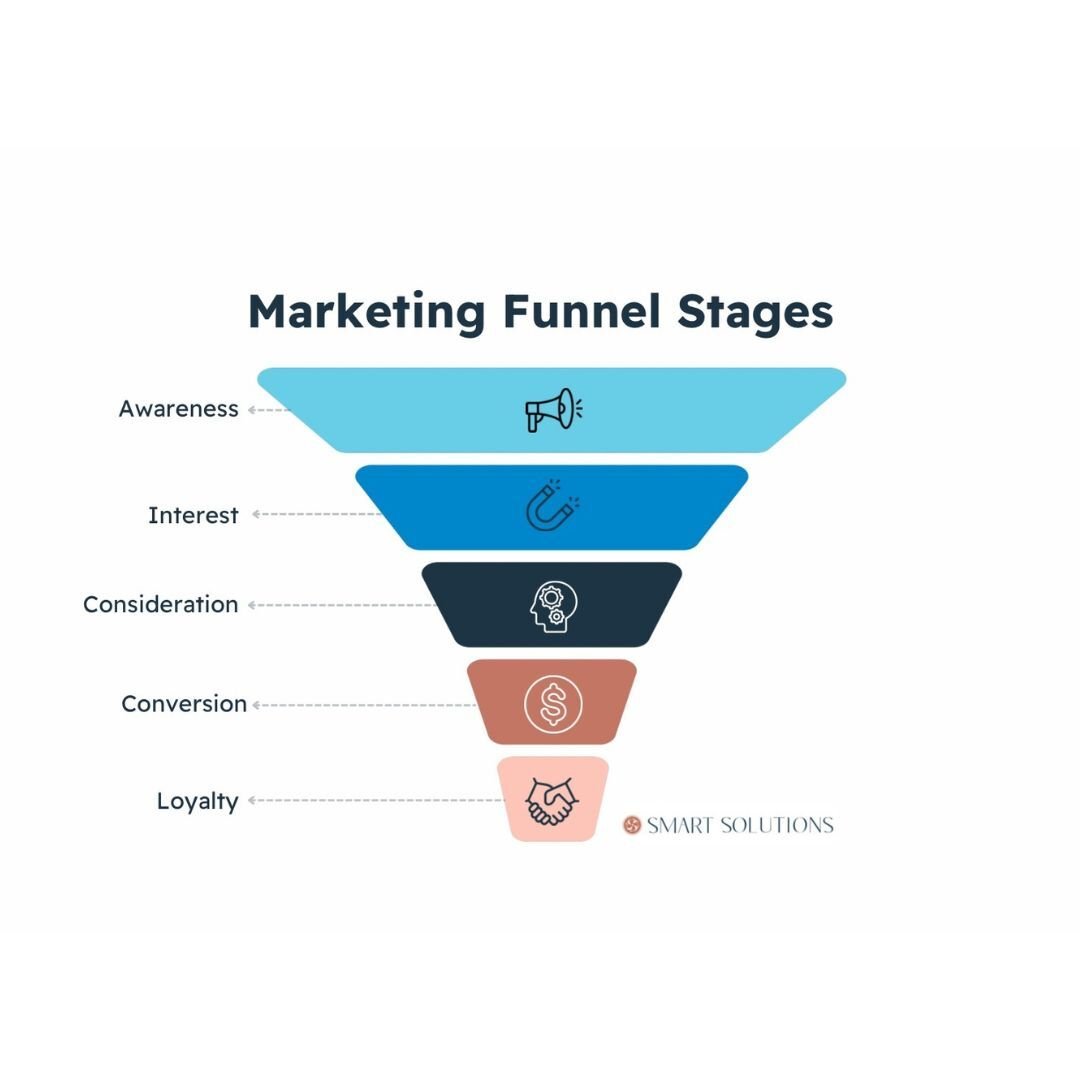
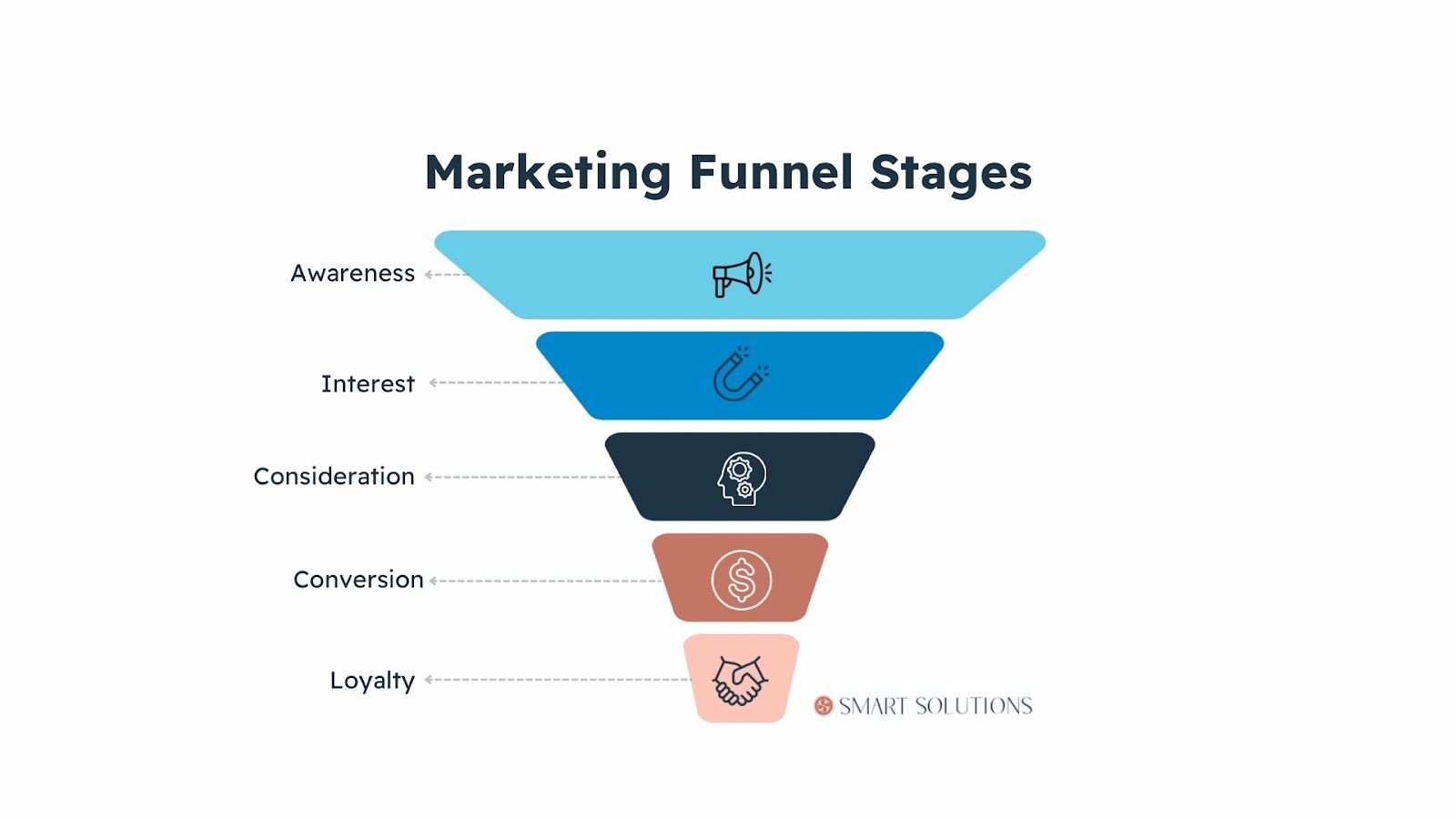
Most funnels are described in stages like Awareness, Interest, Consideration, Conversion, and Loyalty followed by the extra step, Advocacy. While the labels may vary, the core idea remains the same: the funnel helps marketers align the right message, content, and channel with what a customer actually needs in the moment rather than pushing a “buy now” message too early.
AI Search in eCommerce: A Stage-by-Stage Breakdown
AI-powered search doesn’t eliminate the funnel, but it reshapes how people move through it. Instead of clicking through multiple sites, shoppers increasingly rely on AI tools to summarize information, compare options, and surface recommendations earlier in the journey.
The result? Customers move faster, ask better questions, and form opinions sooner, which means brands must earn trust earlier and more consistently across every stage.
Below is a breakdown of each funnel stage, how AI search fits into it, and what that means for marketers.

1. Awareness
This is the top of the funnel, where the goal is to make potential customers aware that your brand or product exists. At this stage, AI tools often act as category introducers — bringing products into view even when the shopper doesn’t know what to search for.
Users typically ask broad discovery questions like:
- “What’s the best way to improve sleep?”
- “What are the top gadgets for remote workers?”
- “What’s the difference between air fryers and toaster ovens?”
In many cases, AI surfaces brands earlier than traditional search would, shaping first impressions before a shopper ever visits a website.
What marketers should focus on:
- Educational, top-of-funnel content that addresses broad problems and use cases
- Clear brand positioning that AI tools can easily associate with a category
- Visibility beyond keywords, including thought leadership and discovery content
2. Interest
In the interest stage, people know your brand or product exists and want to understand it better. They’re looking for clarity, not sales pressure.
Here, AI acts as a teacher, helping shoppers learn faster, simplify complex ideas, and understand what actually matters.
Common questions include:
- “What features matter in a running shoe?”
- “Which laptop specs are important for photo editing?”
- “Summarize the pros and cons of mechanical keyboards.”
What marketers should focus on:
- Educational content that explains features, benefits, and trade-offs clearly
- Product guides, explainers, and newsletters that build understanding
- Messaging that connects product capabilities to real customer needs
3. Consideration
In the consideration stage, shoppers actively evaluate whether your solution is the right fit. AI usage often increases here, with tools acting as curators and analysts that help narrow overwhelming choices.
Prompts commonly look like:
- “Compare Dyson V12 vs. Shark Stratos”
- “What are the top vacuum cleaners under $300 for pet hair?”
Trust becomes the deciding factor as shoppers compare alternatives side by side.
What marketers should focus on:
- Comparison content, case studies, and proof points that build confidence
- Clear differentiation from competitors
- Retargeting and mid-funnel campaigns that reinforce value and credibility
4. Conversion
Conversion is where shoppers are ready to act. Questions at this stage are highly practical and decision-oriented, such as:
- “Where can I get this model at the best price right now?”
- “Does this retailer offer easy returns?”
In addition to AI search tools, shoppers increasingly rely on AI-powered shopping assistants like Perplexity Shopping, Amazon’s Rufus, and Walmart’s in-app generative search to finalize decisions.
What marketers should focus on:
- A friction-free checkout experience
- Clear CTAs, pricing, and policies
- Removing last-mile obstacles that could delay or derail the purchase
5. Loyalty
A satisfied customer returns. In the loyalty stage, the focus shifts to retention — making customers feel supported, valued, and confident in their purchase.
AI often serves as a post-purchase guide, helping customers get more value from what they bought. Searches commonly include:
- “How do I calibrate my new monitor?”
- “Best settings for the Sony A6700 for indoor video”
- “What accessories should I buy for the Nintendo Switch for travel?”
What marketers should focus on:
- Post-purchase education and onboarding content
- Follow-up emails, personalized recommendations, and loyalty programs
- Resources that help customers succeed long after checkout
Going the Extra Mile: Advocacy
Advocacy is where customers like your brand enough to recommend it. The goal is to turn satisfied buyers into promoters through reviews, referrals, and user-generated content.
While AI tools are used less directly at this stage, advocacy plays a powerful supporting role. Reviews, testimonials, and real-world experiences strengthen trust signals that influence both human shoppers and AI-driven recommendations earlier in the funnel.
What marketers should focus on:
- Encouraging reviews and UGC
- Referral and loyalty programs
- Amplifying authentic customer stories that reinforce trust
|
AI Usage by Funnel Stage |
||
|
Stage |
AI Usage |
Primary Role of AI |
|
Awareness |
Discovery, category explanations |
Introducer |
|
Interest |
Learning, decoding features |
Educator |
|
Consideration |
Shortlisting, comparisons, review summaries |
Curator + Analyst |
|
Conversion |
Price checks, configuration help |
Shopping Assistant |
|
Loyalty |
Setup guidance, advanced usage |
Product Coach |
Ready for the AI Shopping Era?
AI-powered search is quickly becoming the default way people discover products, compare options, and validate purchases. The marketing funnel still matters but the path through it is faster, more compressed, and more trust-driven than ever.
Brands that adapt will show up earlier in the journey, build confidence sooner, and carry momentum through conversion, retention, and advocacy.
At Smart Solutions, we help eCommerce teams win in this new era by strengthening visibility and credibility across every stage of the funnel — from content that answers AI-style questions to product experiences that reduce friction at checkout.
Brands that succeed in AI-driven shopping journeys don’t just rank, they get recommended. If you want your products to be found, trusted, and chosen, we can help you build the strategy and execution plan to get there.


Explore More Resources



.png?width=396&height=221&name=Adobe%20shift%20to%20SaaS%20(1).png)